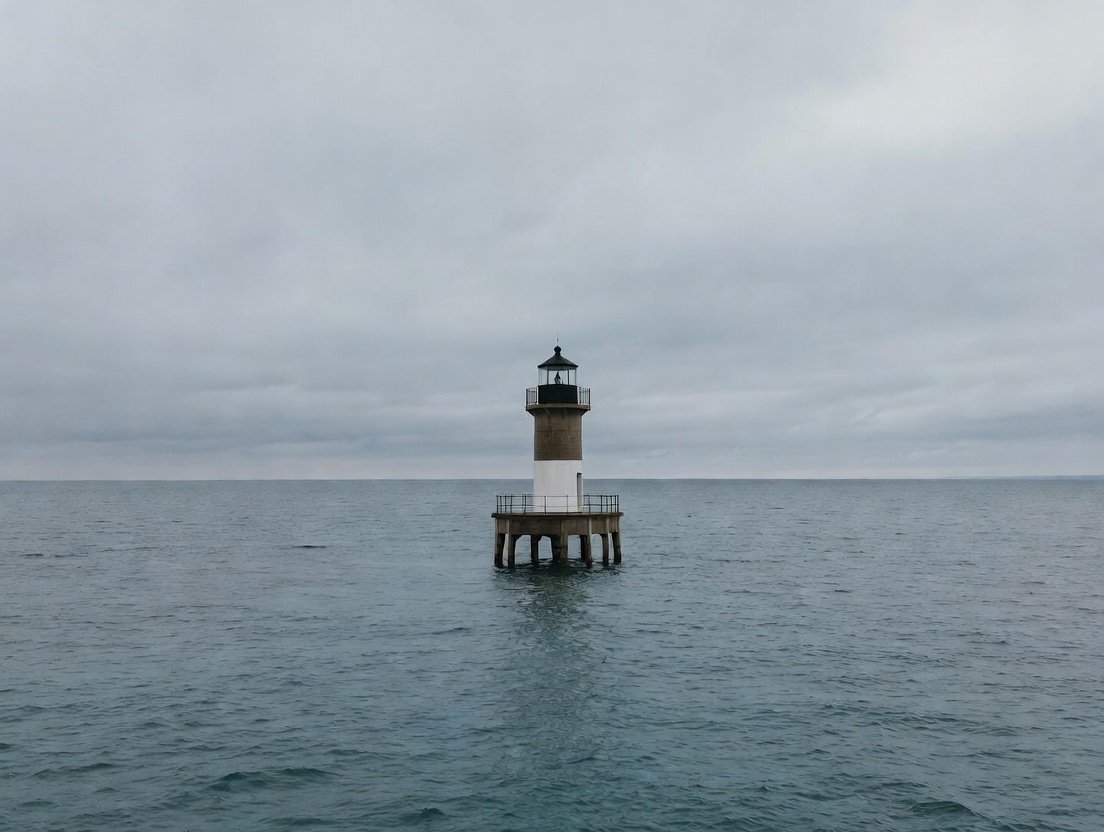
The william e. dever crib lighthouse rises from Lake Michigan as a quiet but powerful part of Chicago’s water system. This special structure helps bring fresh, clean water to millions of people every day. Built in 1935, it sits far offshore and serves two important jobs: it guards a water intake and guides boats safely past the crib.
Why Chicago Needed Offshore Water Cribs
In the 1800s, Chicago grew very fast. People dumped waste into the Chicago River, and the river flowed into Lake Michigan. Water near the shore became dirty and unsafe to drink. City leaders decided to reach farther out into the lake where the water stayed cleaner.
They built large offshore platforms called water cribs. Workers made the cribs on land, floated them out, and sank them in place. Then they dug long tunnels under the lake bed to carry water to shore. The william e. dever crib lighthouse is one of the younger cribs, but it follows the same smart idea that started in 1867 with the first Two-Mile Crib.
The Story of the Nearby Carter Harrison Crib
Before the william e. dever crib lighthouse, Chicago used the Carter H. Harrison Crib, finished in 1900. It replaced the older Two-Mile Crib and sat 2.6 miles east of North Avenue Beach. Named for Mayor Carter Henry Harrison, the crib worked well for many years.
By the early 1930s the Harrison crib showed its age after thirty years of hard work. City leaders planned a new, stronger crib right next to it. They named the new one after another mayor, William Emmett Dever, who served from 1923 to 1927 and started many big public projects. Construction finished in 1935, and the light moved from the Harrison crib to the taller Dever structure.
The two cribs sit side by side and connect by a footbridge. You can still see both today. The older Harrison crib stopped regular service in 1997. In 1998 workers drained its tunnels for checks, but parts of the tunnel collapsed. The city spent millions to fix the problem and made the Harrison crib unusable. The william e. dever crib lighthouse kept working and still does today.
How the William E. Dever Crib Was Built
Workers built the william e. dever crib lighthouse with strong reinforced concrete. The main part stands in about 32 feet of water. A tall central column reaches down almost 200 feet to meet the water tunnel. On top sits a 75-foot-diameter steel well house that workers made on shore, floated out by tugboats, and lowered into place.
A rectangular building on the crib once held kitchens, bedrooms, and storage for the keepers. A square tower or skeleton tower rose above the roof to hold the navigational light. The whole structure looks a bit like a birthday cake from a distance, which is how some visitors describe it.
The light characteristics are simple and strong: a quick-flashing white light with a focal plane of 72 feet above the water. On clear nights the light can be seen up to 22 nautical miles away. In 1976 the city changed the light to electric power and added a modern fog signal that uses a diaphragm instead of the old bell.
The Important Job of the Light
Ships on Lake Michigan need clear guides, especially near Chicago Harbor. The william e. dever crib lighthouse warns captains about the man-made crib that could damage a boat. The quick white flashes help sailors know exactly where the crib sits, even in fog or at night.
Before 1990, keepers lived on the crib year-round. They kept the light burning, opened and closed intake doors, and broke up ice in winter so the water could still flow. After 1990 the light became automatic. Today sensors and cameras help keep the crib safe.
How Water Travels from the Crib to Your Tap
Water enters the crib through screened openings near the lake bottom. It flows down the central well, then travels through a large tunnel (up to 20 feet across) almost 200 feet under the lake bed. The tunnel reaches a pumping station on shore, usually the one at Central Park Avenue. From there the water goes to the huge Jardine Water Purification Plant near Navy Pier—the largest in the world.
Workers treat the water to make it safe. Then it flows to homes, schools, and businesses for almost five million people in Chicago and 118 suburbs. The william e. dever crib lighthouse and its partner cribs still supply a huge amount of fresh water every day.
Life on the Crib: The Keepers’ Stories
Imagine living miles from shore with only water around you! Keepers woke early, checked the light, cleaned the lenses, and made sure the fog signal worked. They cooked their own meals and stayed warm in winter. In summer they enjoyed the breeze and the view of the city skyline far away.
The crib also holds weather instruments. The National Weather Service uses data from the william e. dever crib lighthouse area to make accurate Lake Michigan forecasts. Boaters and pilots rely on these reports every day.
Other Chicago Cribs You Can Learn About
Chicago once had nine permanent water cribs. Six still stand, and two remain active. Here is a short list:
- Two-Mile Crib (1867) – demolished
- Carter H. Harrison Crib (1900) – unusable after 1998
- William E. Dever Crib (1935) – active
- Wilson Avenue Crib (1918) – scheduled for work
- Four-Mile Crib (1891) – scheduled for demolition
- 68th Street / Edward F. Dunne Crib (1909) – active
Each crib tells part of Chicago’s water story. The william e. dever crib lighthouse is one of the newest and still helps every day.
The 1998 Tunnel Collapse and Lessons Learned
When workers drained the Harrison crib tunnels in 1998, some sections collapsed. The city sued the engineers and the company that did the work. They spent $5.3 million to fill part of the tunnel under Lake Shore Drive so the road would stay safe.
This event reminded everyone how important careful planning is for old tunnels. The william e. dever crib lighthouse kept supplying water while the city fixed the problem. Today the system is stronger and safer.
Seeing the William E. Dever Crib Lighthouse Today
You cannot walk on the crib because it is not open to the public and serves as active water equipment. The best way to see it is from a boat. Groups like the Great Lakes Lighthouse Keepers Association sometimes offer special cruises that pass close by. From shore you can spot the crib on clear days with binoculars, especially from North Avenue Beach or Navy Pier.
A NOAA web camera also shows distant views, and many people share photos taken from tour boats or even airplanes. The structure looks small from land but feels big when you sail near it.
For more great stories about Chicago landmarks, check out this helpful blog.
Fun Facts About the William E. Dever Crib Lighthouse
- The crib sits at coordinates 41° 54′ 59″ N, 87° 34′ 23″ W.
- Keepers once used a red glass chimney in an older light on the Harrison crib.
- The Dever crib has a modern quick-flashing white light since 1976.
- Weather data from the crib helps thousands of boaters stay safe.
- The whole system still brings clean water to millions of homes.
Why the William E. Dever Crib Lighthouse Matters Now
Even in 2026 the william e. dever crib lighthouse works hard. It is one of only two active cribs still pulling water for the city. The light stays on to protect ships, and the intake keeps fresh water flowing. Chicago’s water system is a marvel of engineering that started over 150 years ago and still serves people every single day.
The william e. dever crib lighthouse shows how smart planning and strong building can solve big problems. It reminds us that clean water is not automatic—it takes careful work far out on the lake.
In conclusion, the william e. dever crib lighthouse is much more than a navigation aid. It is a living piece of Chicago history that still supplies safe drinking water and helps keep Lake Michigan safe for everyone. Its simple tower and strong crib have stood the test of time. What surprises you most about these offshore water guardians, and would you like to see one up close on a boat tour someday?
References
- Lighthouse Friends – William E. Dever Crib Lighthouse: https://www.lighthousefriends.com/light.asp?ID=866
- USBeacons – William E. Dever Crib Light: https://www.usbeacons.com/lt.cgi?lighthouse=William+E.+Dever+Crib+Light
- The Lighthouse Hunters – Illinois William E. Dever Crib: http://www.thelighthousehunters.com/illinois-william_e_dever_crib.htm
- Wikipedia – Water cribs in Chicago
- Terry Pepper – Seeing The Light (Carter Harrison & William E. Dever Cribs)
- Block Club Chicago and other public records on Chicago water history